Blog: Improving recruitment, retention and joy within General Practice
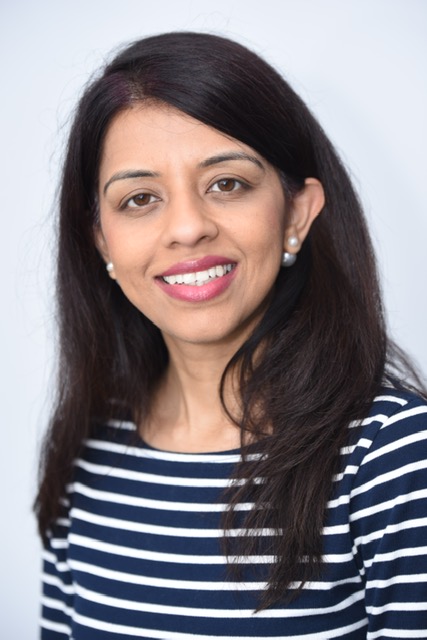
Dr Sonali Kinra is a GP Partner at Hucknall Road Medical Centre, Nottingham and our ICS lead for GP Retention.

This is the first of her monthly blog series where she focuses on improving recruitment, retention and joy within General Practice.

I have recently been appointed to a new role as GP retention lead for Nottinghamshire ICS. It’s a vast and exciting (albeit daunting) remit, so I plan to keep you updated on a monthly basis on where I have been and what I have learnt.

Dr James Waldron (@jammiestdodgers) has been appointed as ‘First5’ lead and it’s great to see him supporting new GPs through their first five years as an independent practitioner. Both Dr Ravinder Harish and Dr Waldron lead on First5 for Vale of Trent faculty and you can get in touch with them via their Facebook group – Nottingham First5 GPs and email first5notts@gmail.com

I’ve been meeting with organisers of Phoenix programme –  @PhoenixProg2019 – and Nottinghamshire Alliance training hub (@NottsAlliance) who offer a huge variety of opportunities for mentoring, fellowships, CPD and career guidance wherever you are on your career spectrum. See their website for further details and educational events.

I was invited to meet with Jo Churchill, Health Minister, who has responsibility for primary care. There were 8 GPs invited to this round table discussion organised by Dr Nikki Kanani – @NikkiKF – NHS England’s Primary Care Medical Director. We covered a range of topics including workforce, workload recruitment and career incentives challenges and opportunities within General Practice and finding the right balance between access and continuity of care.

As one of the organisers of NextGeneration GP – @NextGGP – a leadership programme for trainees and First5 GPs, we held our second event in September. There was a design thinking workshop looking at ‘wicked problems’ by Dr Duncan Gooch, a GP in Erewash. There was also a honest conversation with David Ainsworth – @DavidAinsNHS – Locality Director of Mid Notts CCGs, where we discussed about social prescribing, resilience and the importance of wellbeing and compassion at work.

Lots of attendees wanted to know more about population health and social prescribing- these two videos maybe helpful to you.

If you wish to join the NextGeneration newsletter, click here.

There was also First5 summit which involved an exchange of ideas of the opportunities available within Nottinghamshire & Derbyshire and presentation from NHS England about our workforce numbers. The figures show in the Midlands GP FTE and Headcount, a slight increase compared with the national picture and new GPs are working in the system with portfolio careers. This is testimony to all the exciting supportive programmes in the area.

On 25 September, I joined @FlexNHS workshop – you may wish to follow them on Twitter. They are social movement working towards empowering individuals and organisations towards flexible working – there is loads to do in this area. If you have any ideas you wish to discuss get in touch with me.

Lastly I’ve been to meet with Clinical Directors to discuss about Primary Care Networks (PCN) portfolio working. This is an exciting area as it lends itself to at scale working and addresses the demographic needs of PCN – work in progress and more on this soon.

Over the coming months I hope to see/speak with you to share ideas on how we can work together to improve recruitment, retention and joy within General Practice.

Until next time,

Sonali
@SonaliKinra

sonali.kinra@nhs.net

Dr Andy Haynes to take on new role leading transformation of local healthcare services

The Medical Director of the Nottingham and Nottinghamshire Integrated Care System is to take on a new role as Executive Lead from October this year.

Dr Andy Haynes has been appointed to the post after serving as the Medical Director for both the ICS and Sherwood Forest Hospitals NHS Foundation Trust (SFHFT).

Dr Haynes is currently seconded half time to the ICS from SFHFT, where he has served as Deputy Chief Executive Officer as well as Medical Director since 2014.
Before this he worked at Nottingham University Hospitals NHS Trust (NUH) where he had been a senior consultant Haematologist for 20 years, including Lead Clinician for cancer services.

In the new role Dr Haynes will work with the Chair of the ICS, David Pearson, and will oversee the development of local transformation programmes in the area.

David Pearson said: “I am delighted to announce Andy’s appointment. Andy is an experienced clinical leader who is well-known by the local health community.
“We are very pleased that he will take on a greater role in leading the transformation of our system during this important stage in its development.

“I am sure our staff and stakeholders will join me in congratulating Andy on his appointment and wish him success and support in his new role.

“On behalf of the Board, I would like to thank Wendy Saviour for her exceptional contribution to the ICS, from its inception. Wendy has made a real impact in Nottingham and Nottinghamshire, helping to lay a framework for closer ties between local services that will benefit patients for years to come. We wish her the very best for the future.”

Dr Andy Haynes said: “I have been fortunate to work in Nottinghamshire over three decades in clinical, managerial and leadership roles. We have much to be proud of but significant issues and inequalities remain. The principles which underpin integrated care, as expressed in the ICS development, are fundamental to a sustainable, quality driven health and care system. It will be a privilege to commit my knowledge and understanding of Nottinghamshire to help create this future by supporting the ICS Board.

“I am very proud of the progress Sherwood Forest Hospitals Trust has made and grateful for the learning the role of Executive Medical Director has offered. The Trust will, I am sure, continue to make positive progress and I have committed to provide support until my replacement is in post.”

Richard Mitchell, Chief Executive at SFHFT said: “Andy’s leadership has been instrumental in us developing an outstanding culture and delivering safe, high performing patient services. We are fortunate to have benefitted from his immense contribution to patient care over the last six years.

“He is a trusted and well respected clinician, leader and friend and he will be greatly missed from the day to day running of Sherwood.

“I am, however, delighted Andy has been appointed to lead the Integrated Care System at a time when we need to embed system wide approaches to health and social care by sharing the best expertise and resources we have locally.”

Once he takes up the new role at the ICS, Dr Haynes will be employed on an interim basis for 12 months.

After this period the job description will be reviewed to ensure that the post can deliver new transformation priorities.

A network of GPs that care for people in Sherwood has been shortlisted for a prestigious national award

Local doctors and their teams that care for people who live in the Sherwood area have been named in the General Practice Awards 2019.

Sherwood Primary Care Network (PCN) covers from Ravenshead and Oxton in the south up to Walesby and New Ollerton in the north and includes Blidworth, Rainworth, Farnsfield, Bilsthorpe, Clipstone, Edwinstowe and Ollerton.

Its network of GPs covers the following seven practices:

  • Abbey Medical Group
  • Bilsthorpe Surgery
  • Hill View Surgery
  • Major Oak Medical Centre
  • Middleton Lodge Practice
  • Rainworth Primary Care Centre
  • Sherwood Medical Partnership

The PCN has been named in the shortlist of the General Practice Awards 2019 in the Best Primary Care Network Newcomer category.

The General Practice Awards honour the world of general practice and highlight the best practice and practises across the country. This year hundreds of entries were received. The Best PCN newcomer category seeks to identify a PCN who has managed to take their first steps in developing their network.

The PCN was shortlisted because of the way the GP practices have worked together to provide increased access for patients to GP services. This has included a centralised acute home visiting service, a new system to identify the people most at risk of admission or crisis and providing wound care.

It is part of Mid-Nottinghamshire Integrated Care Partnership (ICP) which is a new partnership of NHS organisations and local authorities which wants to create happier, healthier communities across Mansfield, Ashfield, Sherwood and Newark and reduce differences in healthy life expectancy (the number of years that people live in good general health) by three years.

Sherwood PCN Clinical Director Dr Kevin Corfe said: “It is fantastic that the hard work of GPs and their teams has been recognised in these awards.”

Dr Thilan Bartholomeuz is Clinical Chair of Newark and Sherwood Clinical Commissioning Group and member of the Mid-Nottinghamshire ICP. He said: “It is rewarding to see the innovative work by Sherwood PCN being recognised. It shows the benefits of GP practices working together and how their patients are central to their work and receiving some of the best care in the country.”

David Ainsworth, NHS Locality Director for Mansfield, Ashfield, Newark and Sherwood said: “Congratulation to Dr Kevin Corfe and the teams who have supported him. It’s a great example of GP practices working together in new ways to improve the health of communities.”

The winners of the awards will be announced on 29 November in London.

Personalised care must be at the heart of transformation

By Helen Hassell – Patient Champion for personalised care and member of the NHS Assembly

Helen Hassell is mum to Karl, a 23-year-old with complex physical and learning disability needs.

A passionate advocate for personalised care, Helen is a member of My Life Choices and the NHS Assembly and draws on her experiences of Karl’s care to inform transformation of our health and care services.

Karl’s story

Karl has both physical and learning disability needs, having been born with spina bifida, hydrocephalus and developed epilepsy; he has experienced significant neuro-surgical input resulting in 46 operations. At best, my family has had a space of two years between these operations, at the worst, Karl has endured one operation every week for six weeks. The NHS staff, both surgeons and nurses, are absolutely key to supporting not only the child but also the family at such a testing time.

Karl had a great experience in a mainstream primary school, but we realised when planning for the move into secondary education he needed more specialist support. Children’s services were absolutely brilliant at operating in a holistic way, working the family, the organisations and the structures around the child and the child’s needs. The service we received absolutely felt like an early version of personalised care, and this was 15 years ago.

We had a fairly uneventful journey through children’s services and education, receiving great support from our social worker who ensured access to the various different support services and respite, which were invaluable to us as a family, particularly as we had no family locally to support us.

Moving to adult social care

The real crisis hit at transition, it started late, it was only four months before Karl was 18 and he was told he would have to be reassessed for each service, however in adult social care Karl either needed to be categorised as having a physical disability or a learning disability and yet he had both. There wasn’t a box for this.

As a family, transition is an emotional time, the NHS staff that have supported you for 17 years are having to say goodbye, you are being reassessed for health and social care services and meeting a whole new set of health and social care staff that don’t know Karl or the family, or the journey that we have been on. It’s like starting all over again.

The experience of secondary care consultants wasn’t positive; Karl needed that transition to go smoothly and for the handover to be seamless and not to be asked whether he had ever considered suicide – he didn’t even know what this meant!

In education, Karl continued to do well and was supported through the education system.

The health and care experience continued to decline with the introduction of adult social care. Using a prescribed list of agencies to try and arrange Karl’s care was disruptive to say the least. Agencies didn’t want to engage; I was told there was “no money to be made in looking after people like Karl” – he was too complicated and too difficult. This all had a highly detrimental impact on Karl’s wellbeing.

I explained that we needed an agency that was going to be here to stay with us, be honest with us, and work together to ensure that Karl was well cared for. We had one person who was great and then after two weeks she left. A new agency sent someone who wasn’t even DBS checked to deliver personal care in our home. By this time, we’d had enough, Karl was broken, he was feeling low and switched off from the world. He developed anxiety, depression, was sleeping during the day and didn’t feel like he had a real sense of purpose. As his mum, I had to stop this and make a change. At this point we were 50 per cent funded by health and 50 per cent funded by social care, but the problem was we were caught in the middle – neither had overall responsibility to provide joined-up care.

This blog was written in partnership with NHS Confederation. Follow Helen on Twitter @helenhassell2

My Life Choices is the highly valued co-production group driving service redesign in Nottingham and Nottinghamshire ICS, but it also believes that strategic involvement of patients, carers, service users should be at the heart of our health and care transformation design journey if we are to be successful.

Mid-Nottinghamshire ICP September Board Meeting to be held in public

Members of the public and stakeholders are invited to the Mid-Nottinghamshire Integrated Care Partnership’s first Board Meeting in public.

The Mid-Nottinghamshire ICP is a new partnership of NHS organisations and local councils who are working together across Mid-Nottinghamshire to improve the lives of the citizens in Mansfield, Ashfield, Newark and Sherwood.

The group formed in May 2019 and its vision is to create happier, healthier communities with the goal of reducing differences in healthy life expectancy (the number of years that people live in good general health) by three years.

Members on the ICP Board include representatives from:

  • Ashfield District Council
  • Chair of the Citizen’s Council
  • East Midlands Ambulance Service NHS Trust
  • Healthwatch Nottingham and Nottinghamshire
  • GP practices with Mid-Nottinghamshire
  • Mansfield and Ashfield Clinical Commissioning Group
  • Mansfield District Council
  • Newark and Sherwood Clinical Commissioning Group
  • Newark and Sherwood District Council
  • Nottinghamshire County Council
  • Nottinghamshire Healthcare NHS Foundation Trust
  • Nottingham University Hospitals NHS Trust
  • Sherwood Forest Hospitals NHS Foundation Trust

The first meeting in public will take place at The Summit Centre, Pavilion Road, Kirkby in Ashfield, on Monday, September 9 between 2.30pm and 5pm.

A copy of the agenda, papers and Board protocol are available on the ICP website here. In future all papers for the Board will be available in advance of the meetings in this same place.

Rachel Munton, Independent Chair of the Mid-Nottinghamshire ICP said: “We want to be accessible to people who live in Mid-Nottinghamshire. Holding our meetings in public and varying where they take place around Mansfield, Ashfield, Newark and Sherwood is our first step.”

Richard Mitchell, ICP Executive Lead said: “One of our first decisions as a group was to meet in public because we want to be open, honest and accountable to everyone who works and lives in Mid-Nottinghamshire.”

ENDS

If you have any queries about this please contact Kerry Beadling-Barron, Director of Communications and Engagement at Mid-Nottinghamshire ICP on Kerry.beadling-barron@nhs.net

Mansfield man keeps promise to dying friend thanks to support from hospice

A Mansfield man has thanked a hospice who helped him fulfil his friend’s dying wish by allowing him to be cared for at his home with his friend beside him.

When Steve Bowell learnt his good friend of 50 years Bob Gaydon had just weeks to live he had no hesitation in taking him into his own home and caring for him until he died. It also meant Steve could keep his promise of being with Bob until the end, holding his friend’s hand as he took his last breath.

Bob, a former butcher who also worked in the motor industry and traded antiques, met Steve, a motor trade engineer, back in Sheffield in the 1970s. They became great friends, sharing many interests including shooting and angling and regularly went on fishing holidays to Scotland.

Bob, 76, whose partner Margaret was herself dying of cancer, started experiencing weakness in his legs in May, which he put down to a hernia operation he’d had two months earlier, but Steve suspected something more serious.

He said: “I could see a change in him. In the weeks since his hernia operation he aged decades. I took him to hospital for tests and that afternoon we got the diagnosis of metastatic malignant melanoma. The consultant said he could have six hours, six days or – if we were lucky and got him onto radiotherapy straight away – six weeks.”

Bob could no longer look after his partner because he needed care himself, so Steve, 74, took him to his house in Cuckney, Mansfield, where they had a hospital bed brought into the living room for Bob.

Steve said: “He didn’t want to die in hospital. It’s not a nice place to die. I promised to stay with him and to be with him to the end.”

Bob’s consultant put them in touch with Nottinghamshire Hospice who initially provided care once a week to allow Steve to go shopping, but when Steve was admitted to hospital after complications to routine surgery, the hospice stepped up support to 24-hour care.

“After that we had nurses here every night right up to him dying. They were absolute angels. I’m very, very pleased we kept his spirits up right to the very end,” said Steve.

“He was terrified of going into hospital and I promised him I wouldn’t let that happen. I kept all my promises. Without a doubt we couldn’t have carried it through without the hospice support.

“We’d been good mates for the best part of our lives so it wasn’t a difficult decision to bring Bob home with me. It was a very intense time but I don’t regret it. I wouldn’t change anything. It was very humbling but also gratifying.”

Jo Polkey, Director of Care at Nottinghamshire Hospice, said: “I am so pleased we were able to step in with Hospice at Home support so that Bob could stay at Steve’s home, avoiding the need for a hospital admission.

“At Nottinghamshire Hospice we aim to meet the needs of patients and their carers so that where at all possible patients can die in their preferred place.”

As part of the joint End of Life Care project NHS, bereavement and hospice organisations are working together to provide a single point of access to deliver care for patients and their loved ones at the end of their life.

Deb Elleston, Lead Nurse for End of Life Care at SFH, said: “It’s great that Nottinghamshire Hospice was able to support Steve care for his friend Bob. Our service wants to give everyone in Mansfield, Ashfield, Newark and Sherwood the opportunity to die with dignity and respect in a place of their choosing.”

Creating a truly integrated system with Nottinghamshire’s ICS

By Dr Andy Haynes

Dr Andy Haynes, Clinical director for the Nottingham and Nottinghamshire Integrated Care System (ICS) and deputy chief executive at Sherwood Forest Hospitals Foundation Trust,  explains why building trust is fundamental in creating a truly integrated health and care system.

Background

We were chosen as one of the first areas in the country to develop into an ICS, partly due to our strong history of partnership working. This includes five vanguards and shared pathways between the two acute hospitals.

Our system has a total budget of approximately  £3.1bn. We have created three Integrated Care Providers (ICPs) and 22 Primary Care Networks (PCNs). We serve a population of one million and some of our communities experience the highest and lowest levels of deprivation in the country.

Our journey so far

We have learnt a great deal on our journey to becoming an ICS over the past three years. Whilst the anatomy and physiology of ICSs across the country differ, there are always lessons to share. We have found conversations with other systems incredibly helpful.

A crucial part of our progress has been around establishing trust across the system. Clearly this is a lengthy process which requires honest conversation, genuine listening and a common cause.

We have invested time into nurturing relationships and this has proven to be time well spent. We must keep an eye on the future so that our emerging leaders understand the benefits of collaboration across organisational boundaries. As health leaders, we are reaching out to local authority colleagues and want them to be engaged in decision making at all levels – neighbourhood, place and system. This is vital if we are to fully realise the best inputs and outcomes for our population.

Drivers

We face significant health inequalities. Across a single street in the north of our area, we can see a 15-year gap in healthy life expectancy. In the south, there is a 20-year gap between two villages which are only a 20 minute drive away.

This inequality is visible in access to health and care services too. It is easier to see a GP in some areas than others. People tell us that they are forced to explain their health and care problems to multiple people before receiving the support they need. Access to emergency care and mental health services is also inconsistent. Workforce remains a significant challenge in the East Midlands for aspects of medical and nursing recruitment.

As an ICS we will have much more freedom to manage local services and spend money on health and care. A key focus will be preventing illnesses and providing more services near where people live. This will involve all health and care services working together.

What has worked well?

We are already seeing that collaboration works. Our work to identify people at risk of stroke has already prevented 44 strokes and 12 deaths; our care homes vanguard has resulted in a one-third reduction of emergency admissions for residents who are offered enhanced support.

The ICS Board, which now meets in public, has been advised by a Clinical Reference Group since it began. This multidisciplinary group has been successful in ensuring we maintain a focus on alcohol, cancer and prevention, plus it has encouraged the roll-out of successful interventions across the whole system. Examples include a significant mental health strategy, a system-level outcomes framework, and a single QI methodology.

We have 22 PCNs that are forming, accelerated by the Long-Term Plan, and senior clinical leaders are engaging in creating the transformation in services at this level. Primary care has embedded multidisciplinary risk stratification to help target specific patient groups and offer appropriate interventions. We have consolidated IT/data systems to give rich information.

We recently received funding to carry out additional lung health checks for the early detection of lung disease. We know from previous work that offering scans in places people visit regularly like supermarkets is an excellent way to catch lung cancer and other respiratory diseases sooner. This project has the potential to save many lives in our local communities.

A multi-provider alliance for musculoskeletal services has improved access, reduced costs, and is developing shared decision making, all whilst reducing outpatient attends, which has significantly increased conversion rates.

Future thoughts

It is important to acknowledge that different parts of the ICS will have variable levels of maturity, so knowing how to best support progression is important. Agreeing single versions of activity data is essential to create a baseline from which to measure change. Data can be looked at from an ICS, ICP and PCN perspective. The latter will become increasingly important to reduce health inequalities and understand demand.

Financial thinking must develop to track cost to the ICP, rather than individual organisation, with conversion rates to appropriate surgery. This is the only way that the true financial impact of changes will be assessed.

Finally, the conflict of separate performance management for organisations and the ICS system by regulators must be resolved. This will require courage from all parties.

We believe in a world where everyone benefits from digital

By Pete Nuckley – Senior Service Designer at Good Things Foundation

At  Good Things Foundation we believe in a world where everyone benefits from digital.

That’s why we work with over  5000 community centres across the country  to help people learn new digital skills in order to help them be happier, healthier and better off.

But we’ve found, time and time again, that the very people who are likely to benefit the most from being digitally included are the ones who are most often excluded from it.

That the digitisation of services poses the danger of  increasing  inequalities instead of decreasing them.

It’s hard to put into words how important digital inclusion is. Lives are vastly improved through the information and opportunities that digital brings. But it‘s not always an easy path to becoming digitally included – access to a device and the internet is needed, along with the skills to interpret and navigate the online world safely.

This is why Good Things Foundation are working with Connected Nottinghamshire on their forward thinking digital inclusion strategy. Nottinghamshire have an ambitious service to offer and understand that bringing  everyone  along on that journey is vital.

Good Things Foundation and Connected Nottinghamshire have been co-designing services and the path to inclusion. This has meant talking to people about their needs and what really matters to them, rather than making assumptions about people’s lives because they are 65 or disabled or unemployed or any other box that systems like to put people in. Yes, demographics can give us indicators of where to concentrate our efforts for digital inclusion but we must then spend time with people to involve them in the process. Something that I’m very happy to see Connected Nottinghamshire has been doing from the outset.

A key principal for digital inclusion is ‘going where the people are’ – doing inclusion activities where people feel comfortable and safe gives better outcomes. So Connected Nottinghamshire’s collaborative approach to local partners, outreach and events is refreshing and will undoubtedly reap benefits.

One of the many things that we’re working on with Nottinghamshire is an NHS funded project for Digital Participation in Cancer Services. The number of appointments and paperwork involved in cancer care is complicated with so many professionals to see (all of which are incredible and have long titles that I don’t understand) that a person can get lost in their own journey. Health is being done to them, not with them. So we’re looking at simple ways to help people understand what will happen next, give access to information that is personalised to them and provide emotional support exactly when they need it.

Some of the solutions to these things can be as simple as setting up a closed Facebook group for people with (and in remission from) breast cancer. People helping other people is powerful. They know what others have been through better than anyone and can provide that peer support that is so important. Having a Macmillan Nurse involved in the group can give assurance that the information is accurate, while the group provides a way for the nurse to disseminate information to everyone at once.

We know that people using digital for health is a big ask. It requires new skills followed by a lot of effort to keep people engaged. By making the first contact on the platforms that people are on we reduce the worry that ‘this is beyond me’. This is just one of the ideas that we’ll be testing over the next 12 months.

If you want to find out more information about Nottinghamshire Digital Inclusion Programme please contact  rosie.atkin1@nhs.net.

Husband gives thanks to care which supported him and his wife as she died

More patients in the last stages of life are dying in their first place of choice thanks to a new partnership initiative in Mansfield, Ashfield, Newark and Sherwood.

NHS, bereavement and hospice organisations have worked together to develop the new End of Life Care Together service which provides a single point of access to deliver care for patients and their loved ones at the end of their life.

Since the service started in October 2018 more than 1,600 patients have been supported to receive care such as hospice at home, attendance at day therapy, nurse outreach care at home, or admission to a hospice if required. Bereavement support is also available to family and carers.

One couple who benefitted from this were Elizabeth Hatton and her husband John from Sutton in Ashfield. Elizabeth was diagnosed with lung cancer in 2017 aged 71 and Nottinghamshire Hospice supported Elizabeth and John with overnight Hospice at Home care, enabling John to have a break and get some sleep.

They came in once or twice a week and were absolutely wonderful. Knowing that I would be able to go to bed and get four to six hours sleep helped enormously because I knew it would be full on again in the morning.

My wife got on with them very well too. I can’t speak too highly of them.

John Hatton

This support meant Elizabeth could stay in her own home until caring for her became too much for John. She then moved to a bedded hospice unit where she died in March 2019.

Although she wasn’t at home when she died she was able to stay at home for a lot longer than she otherwise might have due to the hospice nurses coming overnight.

It was one of her main aims to live to see our grandson Isaac make his first communion at church, which she did. This meant a lot to her.

John Hatton

Jo Polkey, Director of Care at Nottinghamshire Hospice said:

We were pleased to provide support for John and Elizabeth.

So they could stay together for as long as possible and to give John some respite from caring.

Jo Polkey

John’s story is a moving example of how care services can support people to die with dignity in their place of choice. The main aim of the new End of Life Care Together initiative is to ensure that this is available for all patients in the last year of life across Mid-Nottinghamshire by all services working together

Figures for the first six months show that more patients have died in their place of choice and fewer patients have needed to attend Accident and Emergency as they have been supported by more appropriate services. If a patient does need to come to A&E at King’s Mill Hospital or the Urgent Care Centre at Newark Hospital they can be identified quickly and the service will support them to go home as soon as possible.

Nottingham City Council worked with the NHS in Nottingham and Nottinghamshire to launch the LoveBump campaign to help women to cut down on smoking after statistics revealed almost twice as many women in some parts of the city and county smoke during pregnancy compared to the national average.

Smokers see their GP over a third more often than non-smokers and smoking is linked to nearly half a million hospital admissions per year, so the drive to encourage smokers to quit is a key part of the NHS Long Term Plan.

This service is about all of us caring for patients together at one of the most important times for them and their loved ones.

A calm and dignified death is not only for the patient, we know it also has a significant impact on their loved ones.

Deb Elleston – Lead Nurse for End of Life Care at SFH

Carl Ellis, Head of Service for End of Life Together, said:

Our aim is to offer a range of end of life care services including hospice at home to all those people who have a need for it in the last weeks of life to support the person and their carer with one to one support through the night in their own home.

This has been found to be just as valuable to the carer as to patient.

Carl Ellis – Head of Service for End of Life Together